
A different craft
A head restaurant excels at one bowl — taste, care, repeat visits. Recruiting franchisees, hygiene, distribution — running a franchise is an entirely different organizational skill.
The world wants Korea — and now, with AI, we can make it real.
Why now — and why it's possible now: the market, culture, technology, and our conviction, put into numbers.
U.S. diners who can tell a mass-franchise taste from a heritage restaurant's true depth*
U.S. demand for Korean food is outpacing new restaurants (Yelp)
U.S. yearly growth in Korean-food imports — now Korea's #1 market (since 2024)
‘KPop Demon Hunters,’ Netflix's #1 film ever — its young fans' love for Korea may last ↑
An agent winning their firm's go-ahead to apply*
Industry tech (Android SDK·Gemini·smart glasses) converging on our complete version*
What a head restaurant pays to enter the agreement
U.S. vs. Korea Korean-food prices (signature dishes — gukbap, galbi)
5-year restaurant survival: U.S. ≈ 2.5× Korea (51% vs 20%)
Aug 2025: 4 of Billboard Hot 100's Top 10 were K-content (#1·4·5·10)
Seoul — Gen Z & millennials' favorite city worldwide
U.S. states naming a ‘Kimchi Day’ (Nov 22) — plus Congress
U.S. Korean restaurants, 1-year growth (demand grows even faster)
Target: our complete cooking-AI — beyond a head chef's teaching*
Progress toward the complete version*
PE buyout interest once a brand lands in the U.S. — many real deals*
BTS at a 40,000-seat U.S. stadium — time to sell out
Korea — #1 non-U.S. content on Netflix worldwide (8~9% of all viewing)
Diners who want K-food's authentic depth, not a localized version*
Objective figures cite public sources (Yelp, Netflix, Billboard, Seoul Gov., Korea Herald, MAFRA, etc.) and do not represent financial performance. Items marked ‘*’ express the company's outlook and confidence — not a guarantee. Some comparative figures may vary by sample and basis.
In America today, Korea is not a fad but a current. K-pop, K-dramas and K-beauty paved the road, and K-food is riding it fast. Most guests at Korean restaurants are now non-Korean.
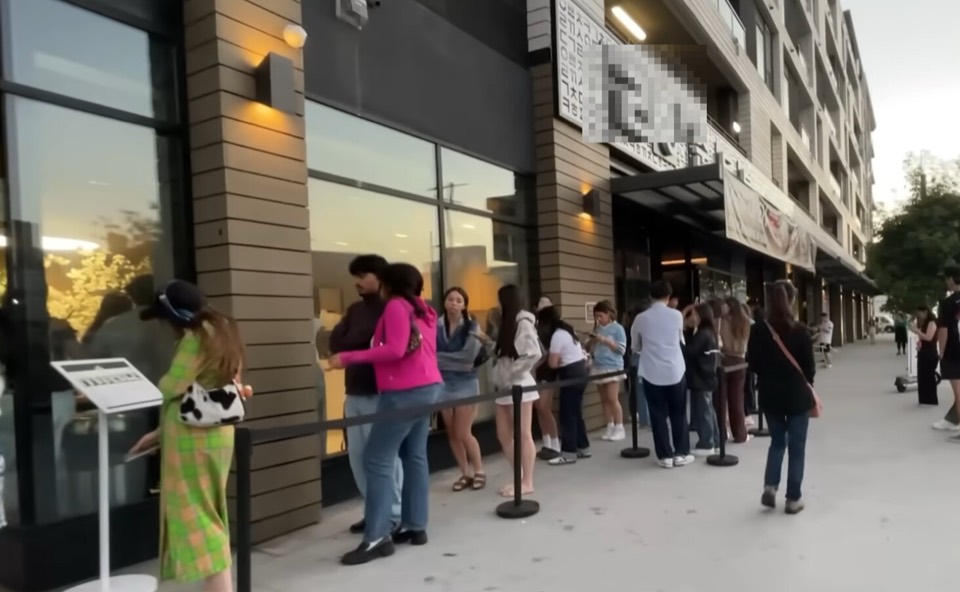
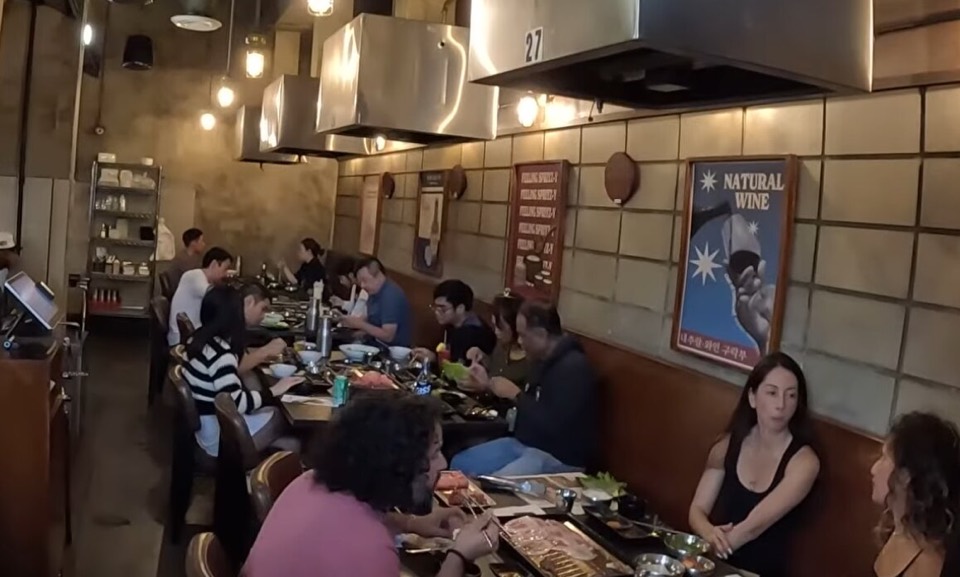
Real scenes from Korean restaurants operating in the U.S.
Hallyu isn't a passing fad
A leading U.S. travel publication named Seoul the city Gen Z and millennials most want to visit — four years running. The Korean wave many expected to fade has only grown stronger with time.
Honestly, the world doesn't love only K-culture — yet the trend is unmistakable.
For young Americans especially, eating Korean food now feels ‘hip’ — because when you love a culture, you grow curious about its food.
So — there is real demand: a genuine curiosity about that deep, traditional taste.
People who found Korean food through their love of K-culture want the deep, original taste — not a conveniently localized one. That demand may be unusually large.
That gap is exactly the demand still unmet.
Now, the authentic deep taste comes to America. With AI.
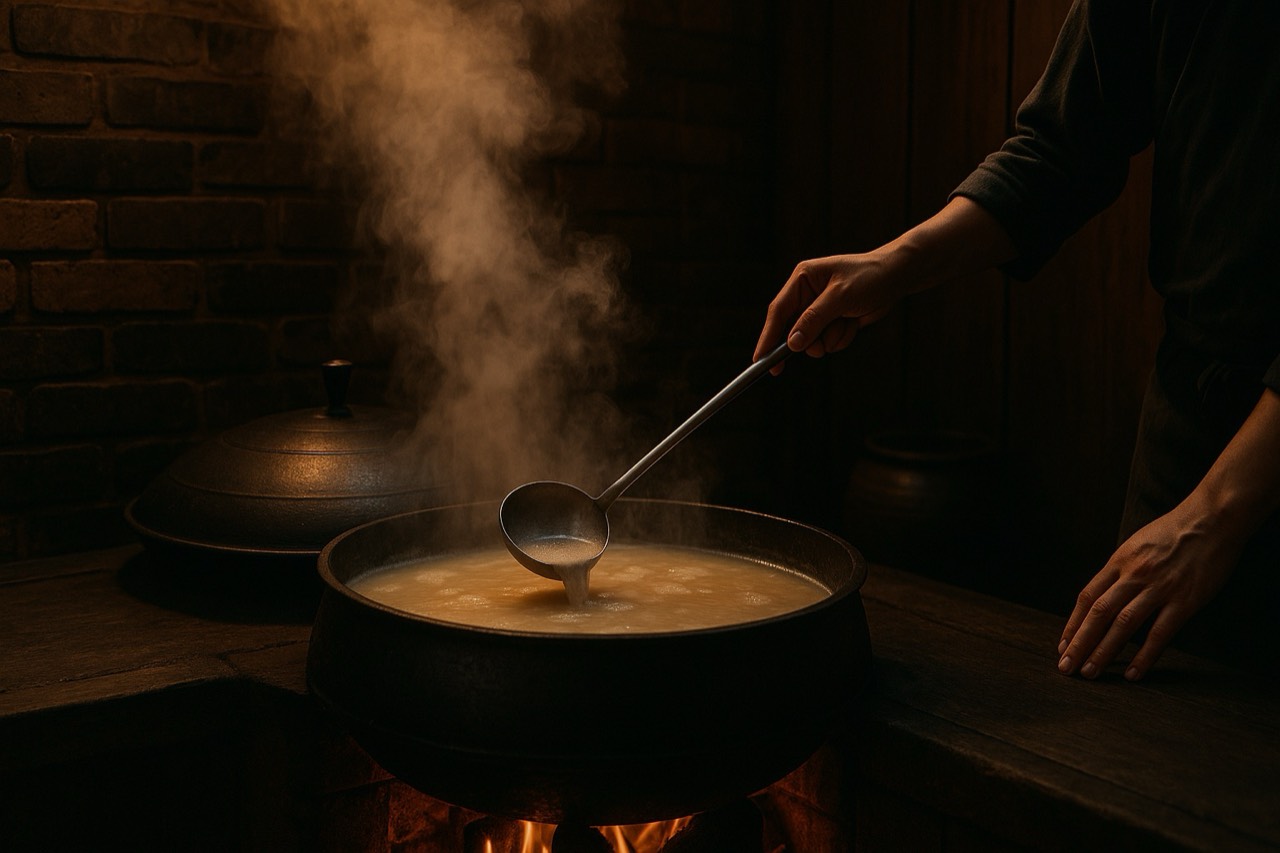
Why did so many head restaurants with real depth decline to franchise and remain a single store? The structure — and human nature — had reasons.
A head restaurant excels at one bowl — taste, care, repeat visits. Recruiting franchisees, hygiene, distribution — running a franchise is an entirely different organizational skill.
In a small country, fans travel from everywhere to a famous original. Opening branches can eat the head restaurant's own sales.
After years of hard-won recognition comes financial comfort. It is only natural to skip the stress of franchising.
This is not a someday idea. The hardest core technology is already built, and the system's skeleton stands on top of it. It is being developed to work in real kitchens — not as a demo for show.
The standard cooking process, captured first-person on Galaxy XR.
A high-intelligence general AI learns that dish's touch from the footage.
AI watches the learner's live view, teaches in conversation, and grades the deviation from the original.
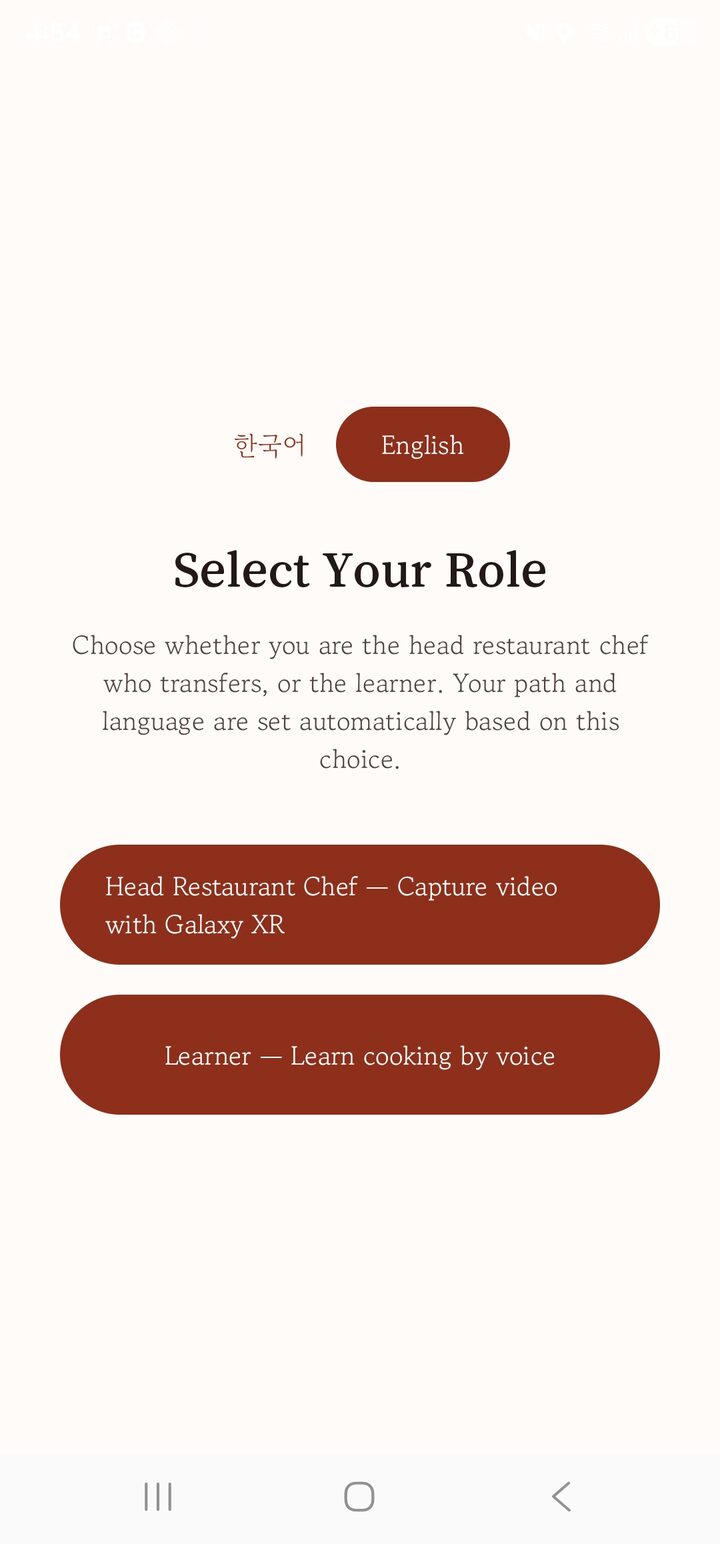
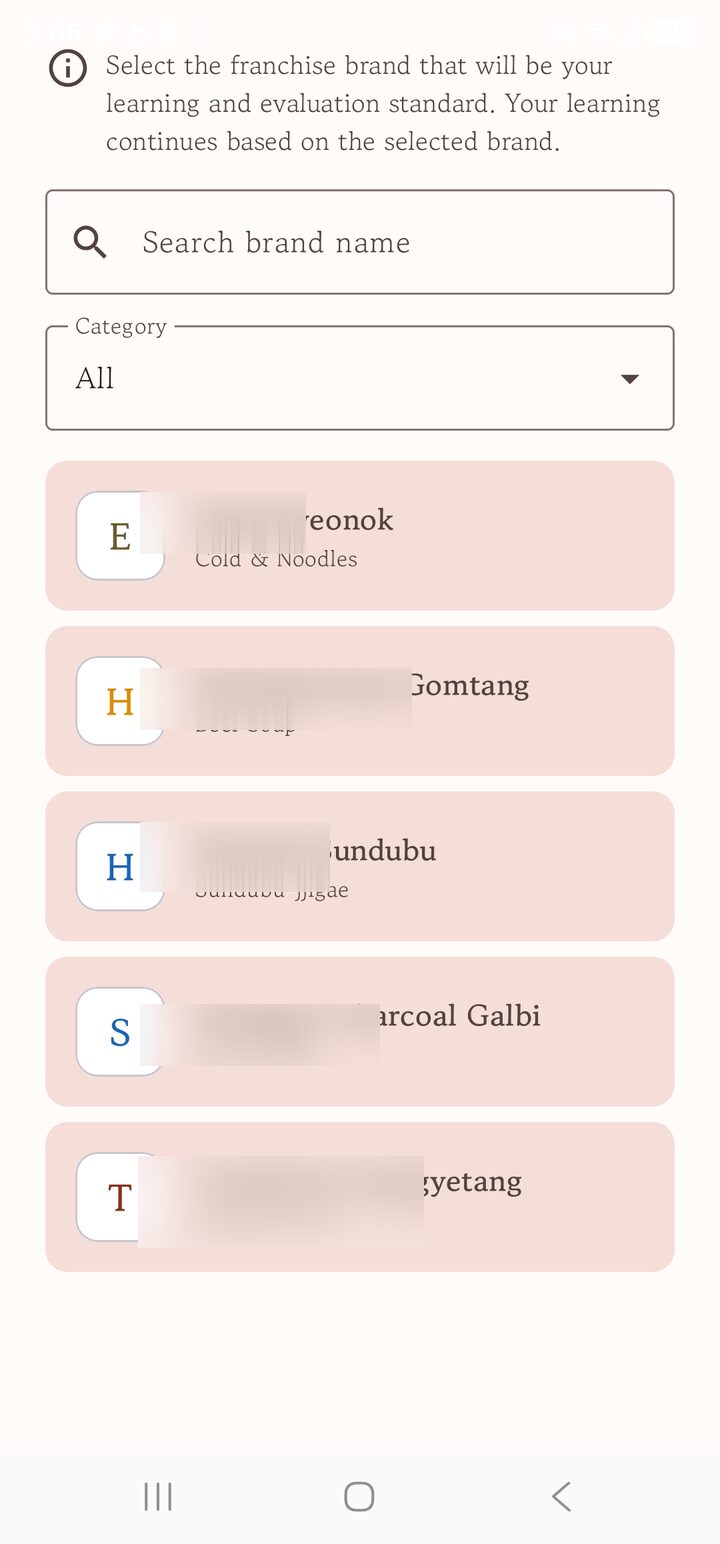
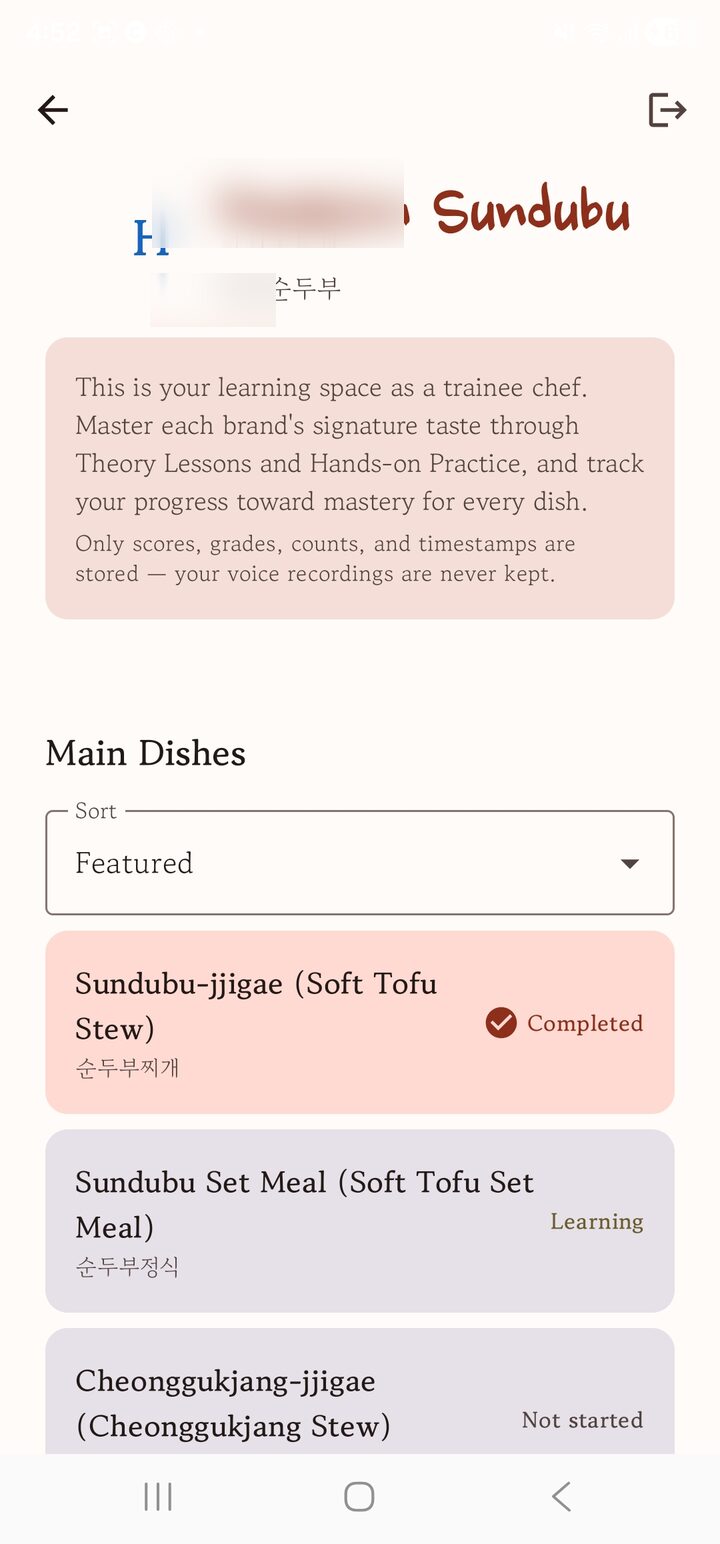
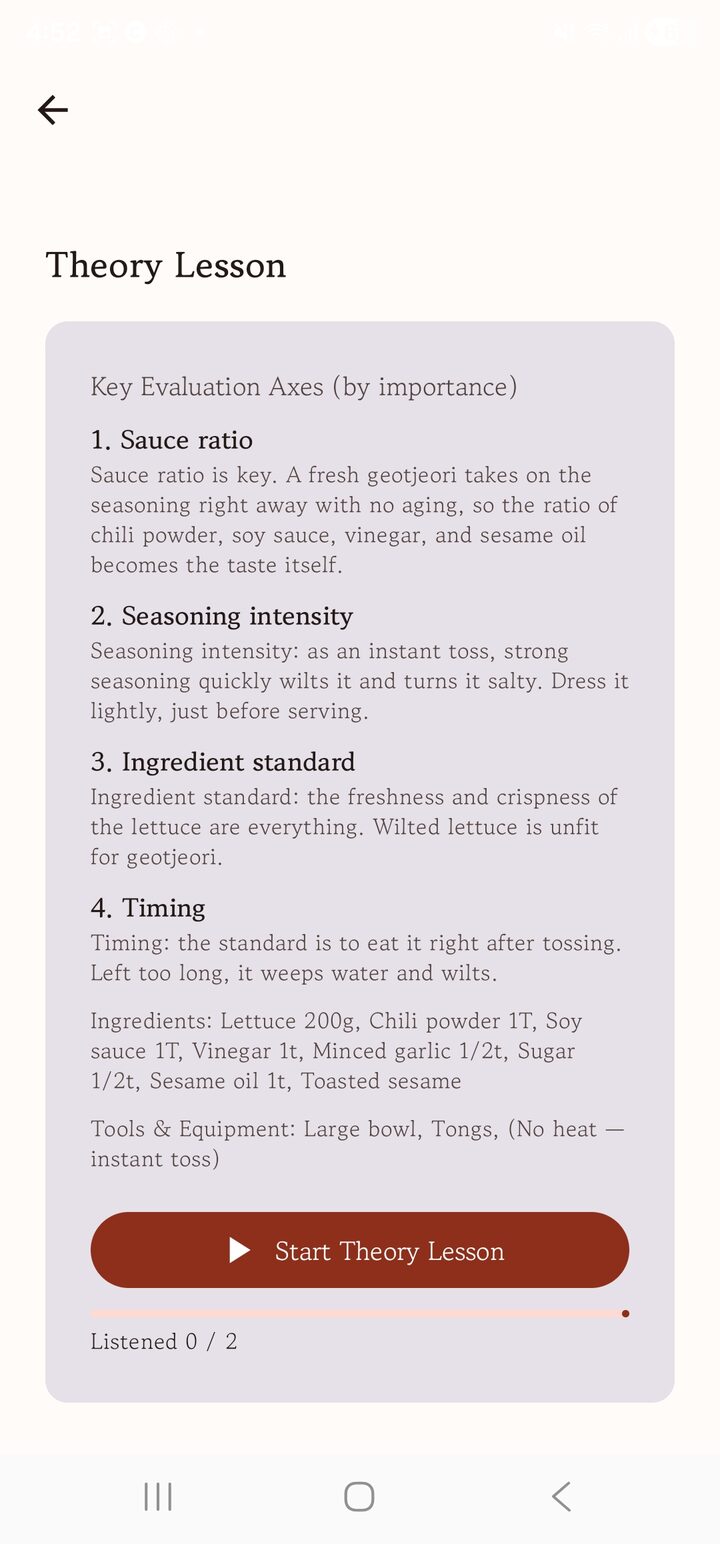
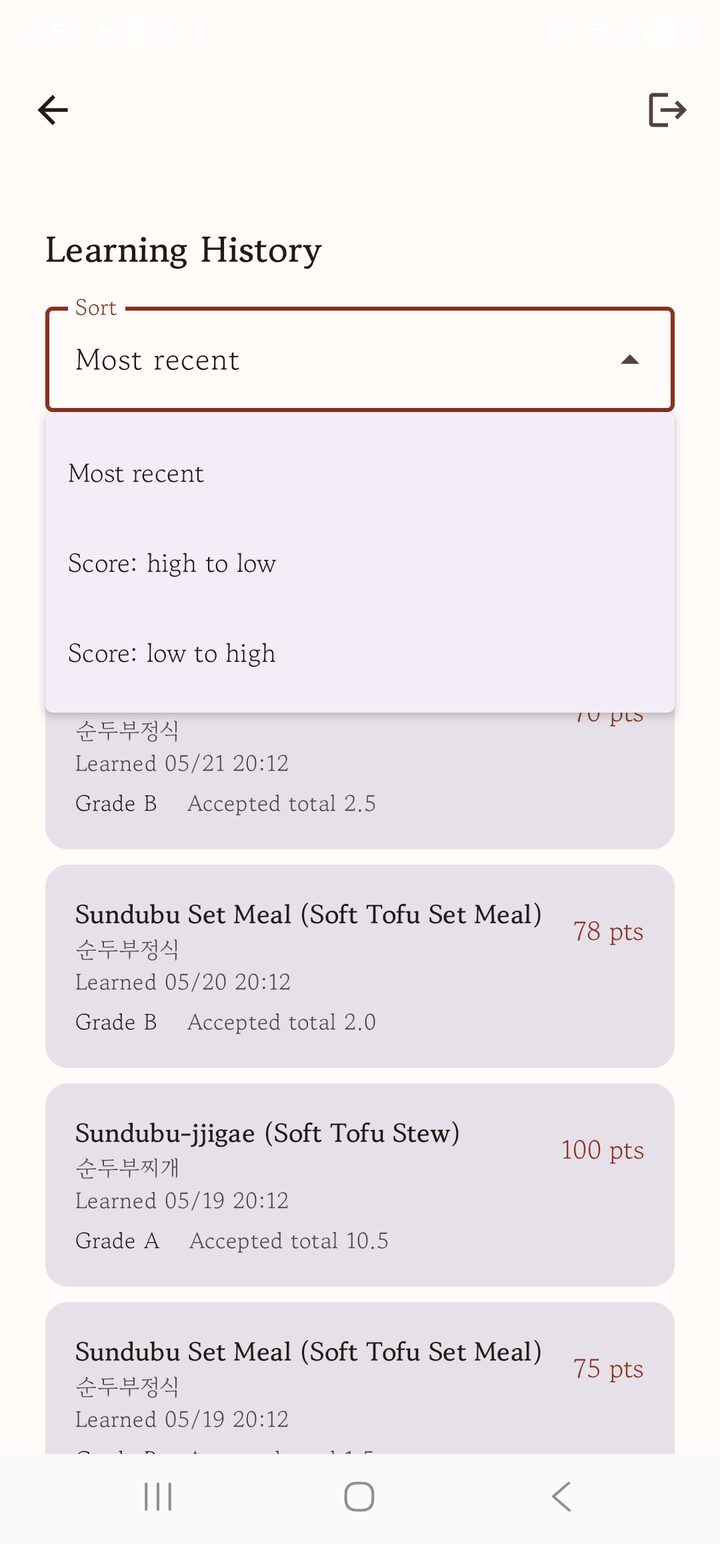
Restaurant names in some screens are masked prior to partnership. (Pilot-stage screens)
On-device vision AI · system skeleton · cloud training link · real-time role split
Uniting on-device & cloud AI on XR
Head-restaurant filming · on-site device validation
Let us be clear about one thing: no one can match a head chef's cooking itself. What we surpass is only the teaching — and that teaching is exactly what AI fills and exceeds.
It teaches every learner — anytime, any number of times, always by the same standard.
It marks the exact object in the learner's view and turns guesswork into numbers.
It remembers the original's pattern and keeps checking, in real time, that the learner stays on it.
And this is not a road we walk alone — the whole industry is racing toward shared-view devices and on-device AI. We are riding that tailwind.
What the teaching aims for → Why the industry points the same way →
For head restaurants in Korea
Starting remotely, it is natural to wonder, “Could this become a burden?” So here are just the facts: the agreement is only a statement of interest, and the head restaurant pays nothing.
So across the entire partnership and expansion, the head restaurant's cost is $0.
The agreement only states interest — legal force begins at the formal contract, and until then you can stop anytime with zero burden.
And because a head restaurant's recipe and touch are an irreplaceable asset, we wrapped them in layered security. Security design →
“A head restaurant brings just one thing: the deep taste built over the years.”
For franchise agents in the U.S.
In the U.S. market, the first landing matters most. When that first collaboration lands well, the next road follows naturally: we go long with partners who deliver.
A category's first brand enters the U.S. The agent who helps make that happen stands at the front of the line.
A brand successfully established on the ground is trust proven by results, not words.
On that trust, being the first we talk to about the next brand or the next country is a natural next step.
Acquisition and price examples cite public reports and filings; they do not state, guarantee, or imply this business's revenue.
Head restaurant or U.S. agent — it all starts with one step.

 Head restaurant · Korea
  Learner · U.S.